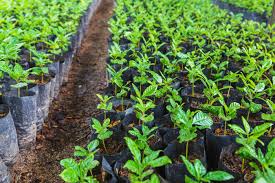
Great coffee starts with great soil. The chemical composition of the soil plays a vital role in the health of the coffee plants. The soil influences the growth and the quality of the beans the plants produce. By maintaining the right balance of macro and micronutrients, coffee farmers can cultivate robust and flavorful coffee beans.
Macro vs. Micro Nutrients
Macronutrients are needed in large quantities to form the main components of plant cells, like carbohydrates, proteins, and lipids. Whereas micronutrients are needed in smaller quantities and mainly help activate plant enzymes.
Having the correct balance of both of these is vital for a plant’s health and productivity.
Macronutrient Needs
The most important macronutrients for coffee growth are:
- Nitrogen (N): Crucial for plant structure, flowering, and fruiting.
- Potassium (K): Essential for photosynthesis, respiration, and circulation
- Phosphorus (P): Important for root, flower bud, and fruit development, and energy storage and transfer
- Calcium (Ca): Essential for root development.
- Magnesium (Mg): Important for many plant functions, especially photosynthesis
- Sulfur (S): Plays a structural role in proteins, and root development.

Fun fact! The balance between nutrients is very important. Higher amounts of Calcium can lead to larger bean size and less flavor.
Micronutrient Needs
Micronutrients, though in smaller amounts, are equally essential for coffee plant health:
- Iron (Fe): A part of chlorophyll
- Zinc (Zn): Important for plant growth and pollen, affecting flowering and fruit size
- Manganese (Mn): Crucial for photosynthesis
- Copper (Cu): Used to protect the coffee plant and control diseases
- Boron (B): Important for cell division — most likely to limit coffee production.
- Molybdenum(Mo): Vital for the nitrogen cycle
These elements act as catalysts for enzymatic reactions crucial for plant metabolism and defense. They also play a large role in flower quality and fruit production.
Soil acidity
The nutrients of soil are not the only determining factor in coffee growth and flavor. Coffee thrives in slightly acidic soils with a pH range of 5.5-6.5. If the soil has too high of acidity (low pH) it can lead to aluminum and manganese toxicity, which could hinder coffee growth. If the soil has too low of acidity liming may be necessary to correct aluminum and manganese toxicity.